

How to Travel With a Dog in a Car Without Stress

Road trips with your dog sound amazing in theory. Windows down, ears flapping, tail wagging, open road ahead. And honestly, with a little preparation, that is exactly what it can be.
But if you have ever driven anywhere with an anxious dog, a dog who will not sit still, or one who gets carsick on every single journey, you know it can also be a bit of a nightmare. The good news is that most of those problems are completely fixable before you even leave the driveway.
Here is everything you need to know about travelling with a dog in a car so both of you actually enjoy the trip.
Before You Leave: Preparation Makes Everything Easier
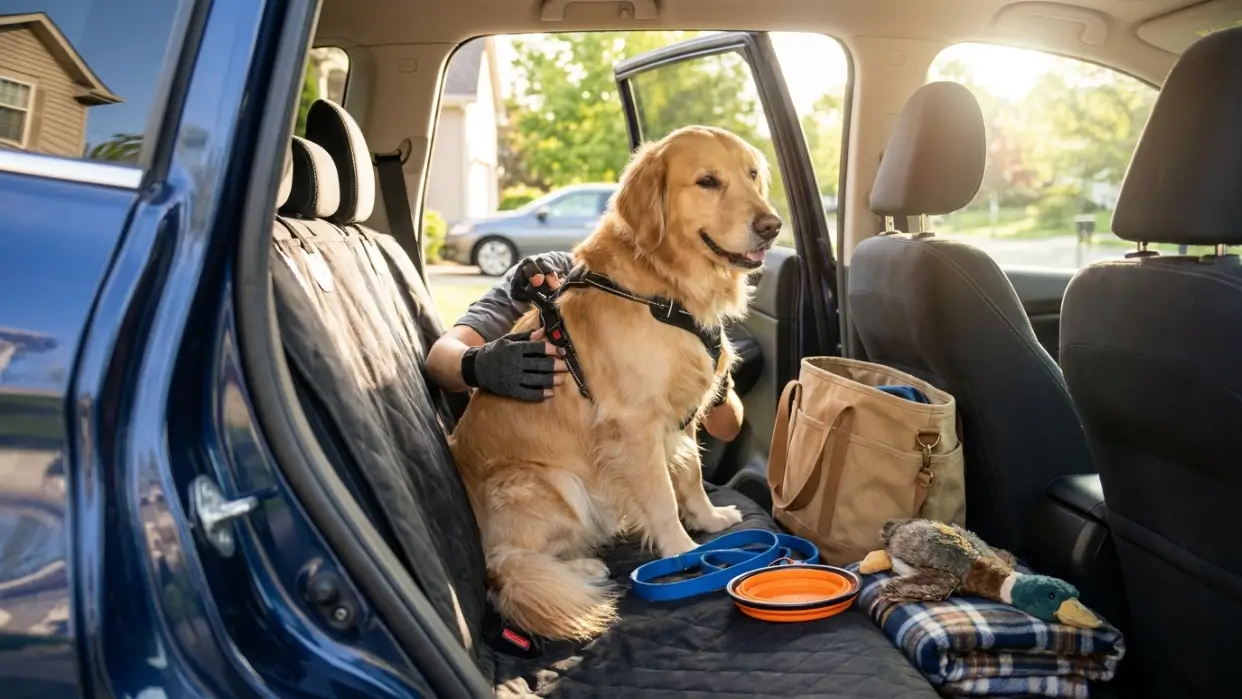
The biggest mistake most dog owners make is not preparing their dog for the journey before the day arrives. Dogs that are used to being in the car handle long trips much better than dogs who only ever get in a car to go to the vet.
Start with short practice runs. If your dog is not a regular car traveller, take them on a few short drives in the weeks before your trip. Around the block, to the park, to a friend’s house. The goal is to help them associate the car with normal, positive experiences rather than something that only happens on big scary occasions.
Visit the vet beforehand. For long trips, it is worth checking in with your vet, especially if your dog gets anxious or carsick. They can recommend calming supplements, motion sickness medication, or other solutions that make the journey safer and more comfortable.
Update their ID and microchip details. Before any road trip, make sure your dog’s collar tag has your current phone number and their microchip details are up to date. If they get lost in an unfamiliar place, this is what brings them home.
Keep Your Dog Safe in the Car
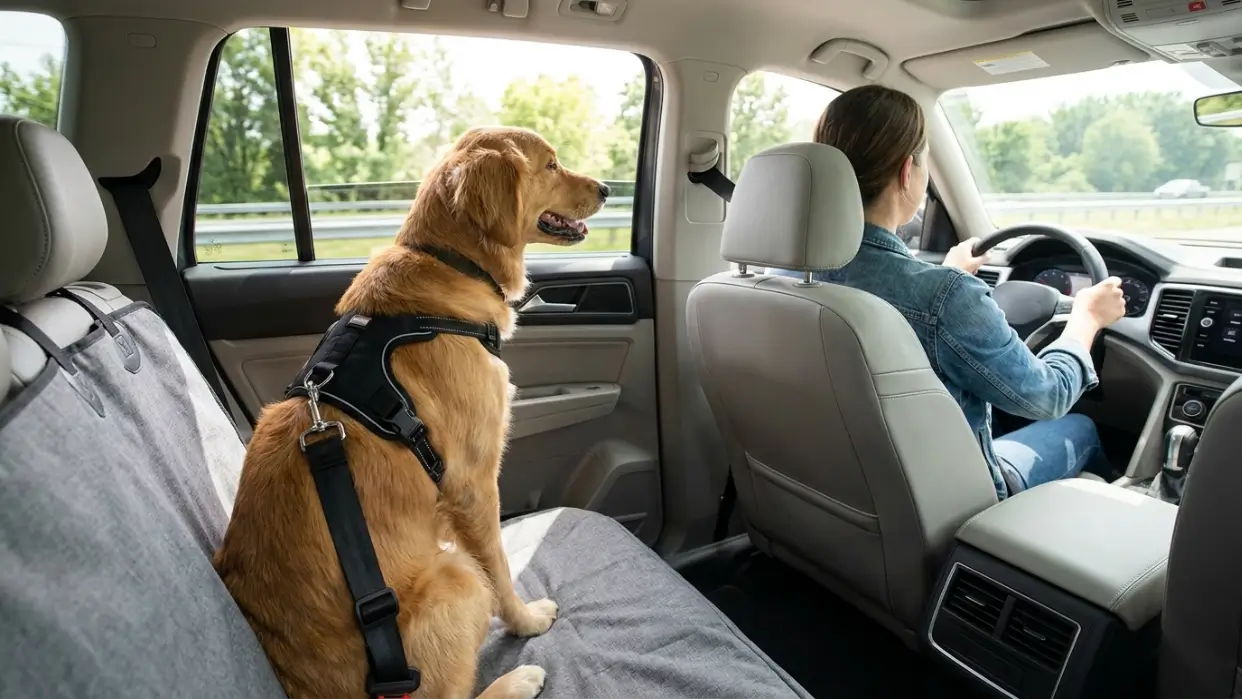
This is the most important part of car travel with a dog and it is also the part most people skip. Dogs roaming freely in a moving car are a distraction to the driver and at serious risk of injury in the event of sudden braking or an accident.
Use a crate or carrier. For smaller dogs especially, a well-ventilated crate secured in the back seat or boot is one of the safest ways to travel. It limits movement, reduces anxiety for dogs who feel more secure in enclosed spaces, and protects them if something goes wrong.
Amazon pick: MidWest Homes for Pets iCrate Single Door Dog Crate or the Petmate Two-Door Top Load Pet Kennel. Both are well-ventilated, secure, and available in multiple sizes.
Use a dog seat belt or harness. For larger dogs, a crash-tested dog seat belt that clips into the car’s seatbelt buckle keeps them safely restrained without confining them completely. Make sure it is a proper crash-tested harness and not just a basic clip.
Amazon pick: Ruffwear Load Up Dog Car Harness or the Kurgo Tru-Fit Smart Dog Walking and Travel Harness. Both are crash-tested, well-fitting, and trusted by dog owners worldwide.
Use a back seat barrier or boot guard. If your dog travels in the boot of an SUV or estate car, a boot guard or back seat barrier keeps them in their designated space without fully restricting their movement.
Amazon pick: Frisco Steel Back Seat Barrier or the Rabbitgoo Dog Car Barrier. Both are adjustable, easy to install, and available in multiple sizes to fit different vehicles.
Keep Your Dog Comfortable on the Journey
Safety comes first but comfort makes the whole experience better for everyone. A comfortable dog is a calmer dog and a calmer dog makes for a much more enjoyable drive.
Bring their bed or a familiar blanket. Having something that smells like home helps dogs feel settled in an unfamiliar environment. Their favourite blanket or a piece of your clothing in the car with them can reduce anxiety significantly.
Control the temperature. Dogs overheat much faster than humans. Keep the car cool, make sure they have good airflow, and never leave them in a parked car, even for a few minutes. Car temperatures rise dangerously fast even on mild days.
Keep the window open just a little. A slightly cracked window gives fresh air without letting them stick their head out, which can cause eye, ear, and throat injuries at speed.
Give them their own space. Dogs travel better when they have a consistent spot in the car that belongs to them. Jumping between seats or moving around increases anxiety and motion sickness. Pick a spot, set it up comfortably, and keep them there for the journey.
Plan Stops Along the Way
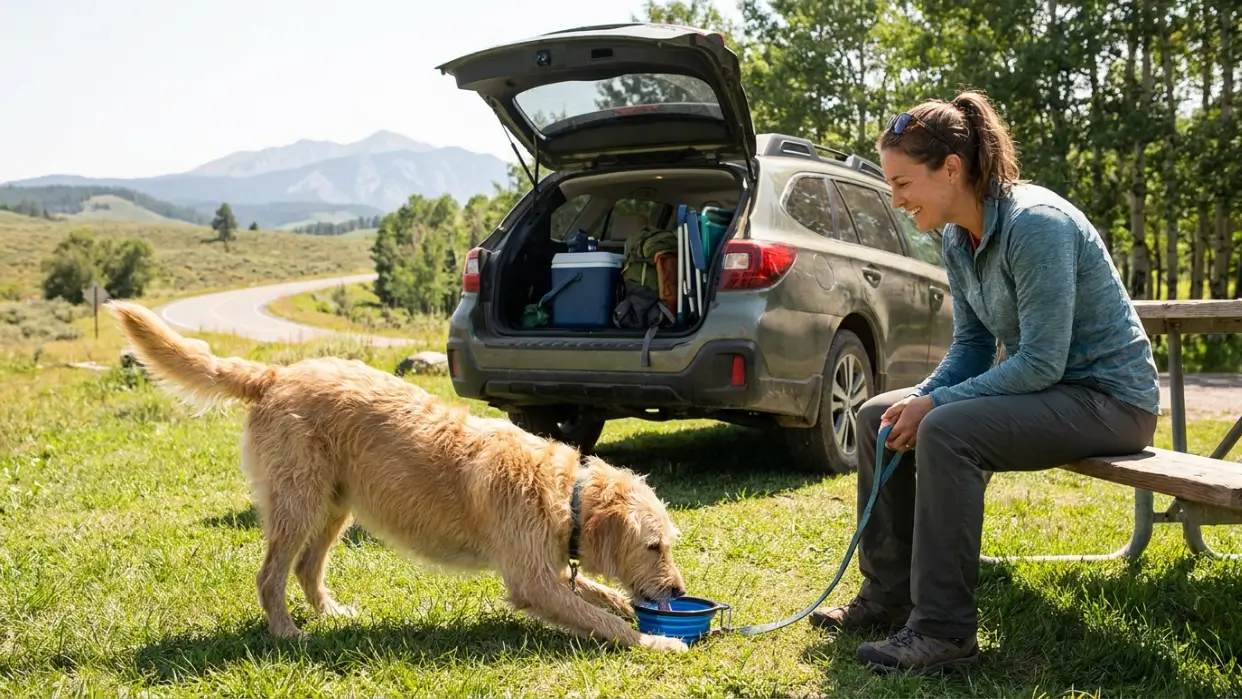
Dogs cannot hold their bladder for eight hours any more than a young child can. Plan regular stops every two to three hours so your dog can stretch their legs, go to the toilet, drink water, and reset before the next stretch of driving.
What to do at each stop:
- Let them walk around on a lead for at least 10 minutes
- Offer fresh water
- Give them a chance to go to the toilet before getting back in the car
- Check that they are not too hot or showing signs of stress
Research dog-friendly stops before you leave. Services, rest areas, and parks along your route that allow dogs vary widely. Planning a few specific stops in advance means you are not scrambling to find somewhere suitable with an anxious dog in the back.
Handle Car Sickness the Right Way
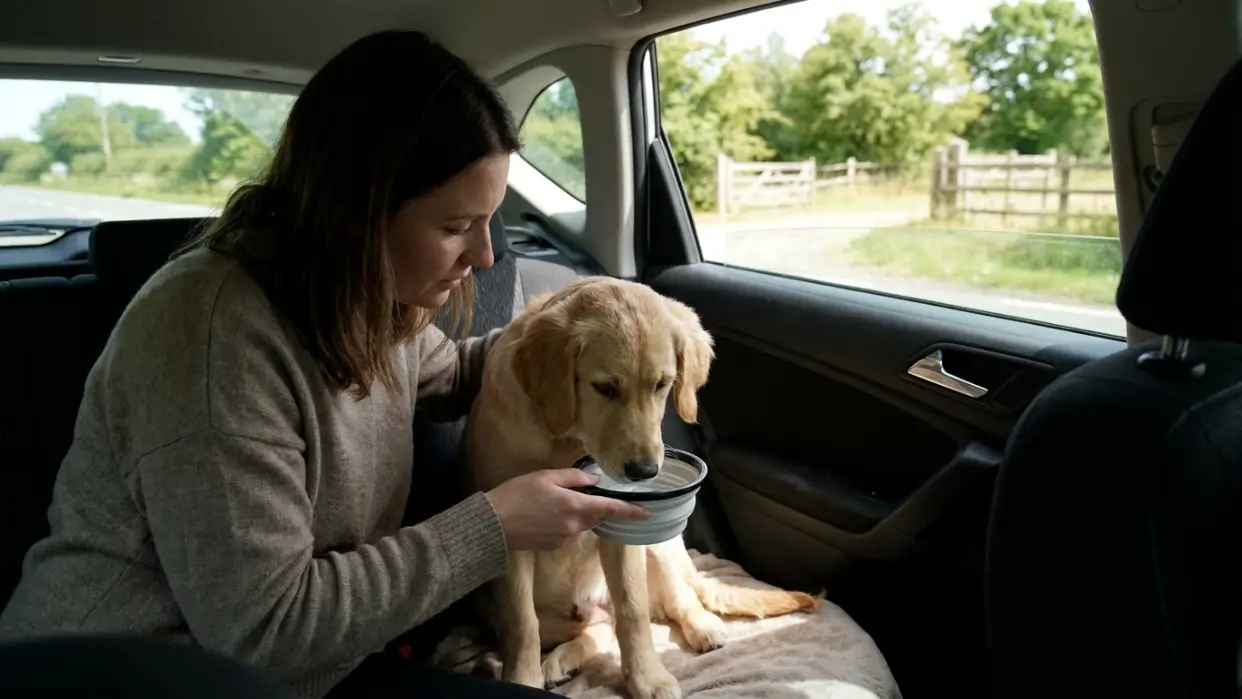
Dog car sickness is more common than most people realise, especially in puppies and younger dogs whose inner ear is still developing. Signs include drooling, yawning excessively, whining, licking lips, and vomiting.
Feed your dog a light meal two to three hours before the journey rather than right before leaving. Travelling on a full stomach makes sickness much more likely.
Keep the car well ventilated. Fresh air helps with nausea just as it does for humans.
Try calming supplements or anti-nausea medication. Your vet can recommend the right option for your dog. Products like Adaptil or natural calming treats can also take the edge off for anxious dogs.
Amazon pick: Adaptil Calming Collar for Dogs or the Zesty Paws Calming Bites. Both are popular, vet-recommended, and available on Amazon.
Face your dog forward if possible. Dogs in crates or behind barriers that face the rear of the car are more likely to feel sick than those facing forward. If your dog gets carsick, try repositioning them.
Read More: How to Pack Jewelry for Travel (the Right Way)
Pack a Dog Travel Kit
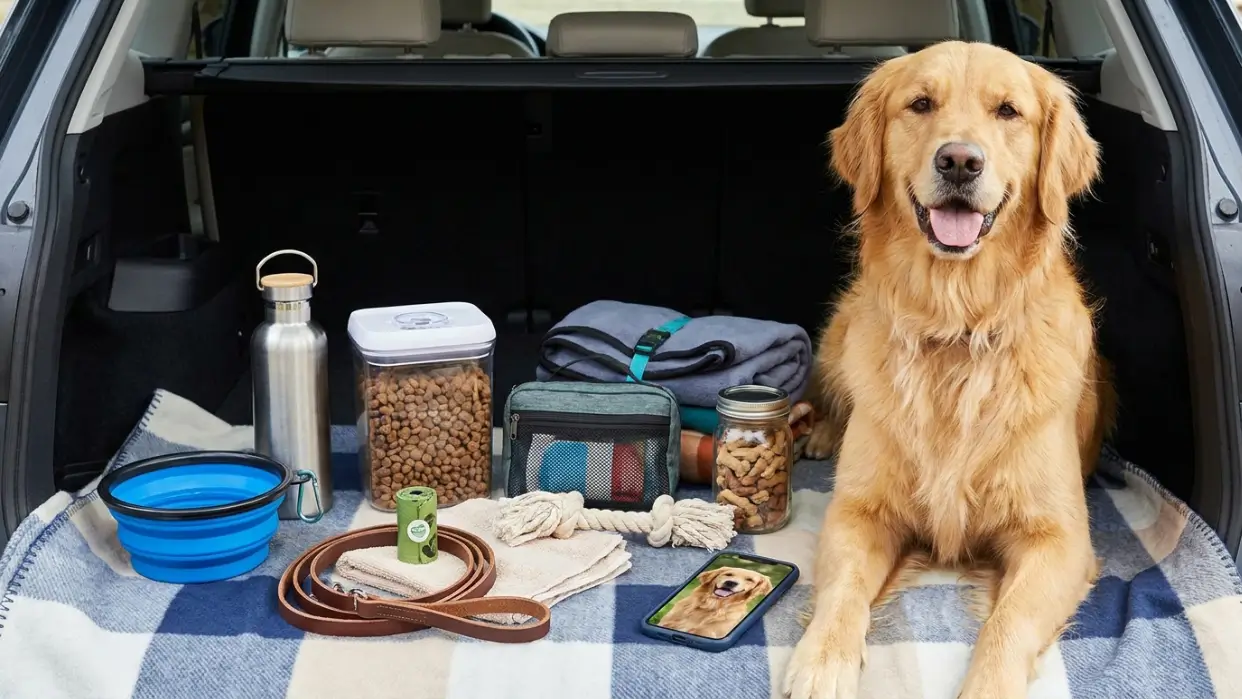
Having everything your dog needs packed and ready before you leave means no frantic searching mid-journey. Here is what to include:
Water and a portable bowl. Dogs need to stay hydrated throughout the journey, especially in warm weather. Collapsible travel bowls are compact and easy to pack.
Amazon pick: Ruffwear Quencher Portable Dog Bowl or the COMSUN Collapsible Dog Bowl. Both are lightweight, easy to clean, and take up almost no space.
Enough food for the trip. Pack their regular food in a sealed container or zip bag. Switching foods during travel can upset their stomach on top of everything else.
Poo bags and a small towel. For obvious reasons. Also handy for wiping muddy paws before they get back in the car.
Their favourite toy or chew. Having something familiar to focus on helps dogs stay calm during long stretches between stops.
Any medications they take regularly. Do not leave these behind. Keep them easily accessible rather than buried in the boot.
A recent photo of your dog. In case they get lost at a stop, having a clear recent photo on your phone makes it much easier to get help quickly.
Help an Anxious Dog Feel Better in the Car
Some dogs are genuinely anxious in the car and no amount of preparation completely takes that away. But there are things that help.
Cover their crate with a blanket. For dogs who feel safer in enclosed spaces, draping a blanket over the crate reduces visual stimulation and can significantly lower anxiety.
Try a calming wrap or anxiety vest. These apply gentle pressure to the dog’s torso, similar to swaddling a baby. They do not work for every dog but many owners report real improvement with consistent use.
Amazon pick: ThunderShirt Classic Dog Anxiety Jacket. One of the most widely used and recommended anxiety products for dogs, with thousands of positive reviews from dog owners.
Play calming music or white noise. Studies have shown that certain types of music, particularly classical music and reggae, help reduce stress in dogs. There are also specific playlists on Spotify designed for anxious dogs in cars.
Stay calm yourself. Dogs pick up on your energy very quickly. If you are stressed and anxious about the journey, they will feel it. Stay relaxed, keep your voice low and steady, and check in with them calmly rather than frantically.
When You Arrive
The journey does not end when you pull into the car park. Give your dog time to decompress after a long trip, especially if they found it stressful.
Let them walk around and sniff their new environment before expecting them to settle. Sniffing is one of the main ways dogs process information and calm themselves down. Do not rush them inside or into an unfamiliar situation immediately after a long drive.
Offer water and food once they have had a chance to settle and make sure their sleeping area at the destination smells familiar with their blanket or bed.
Quick Car Travel Checklist for Dogs
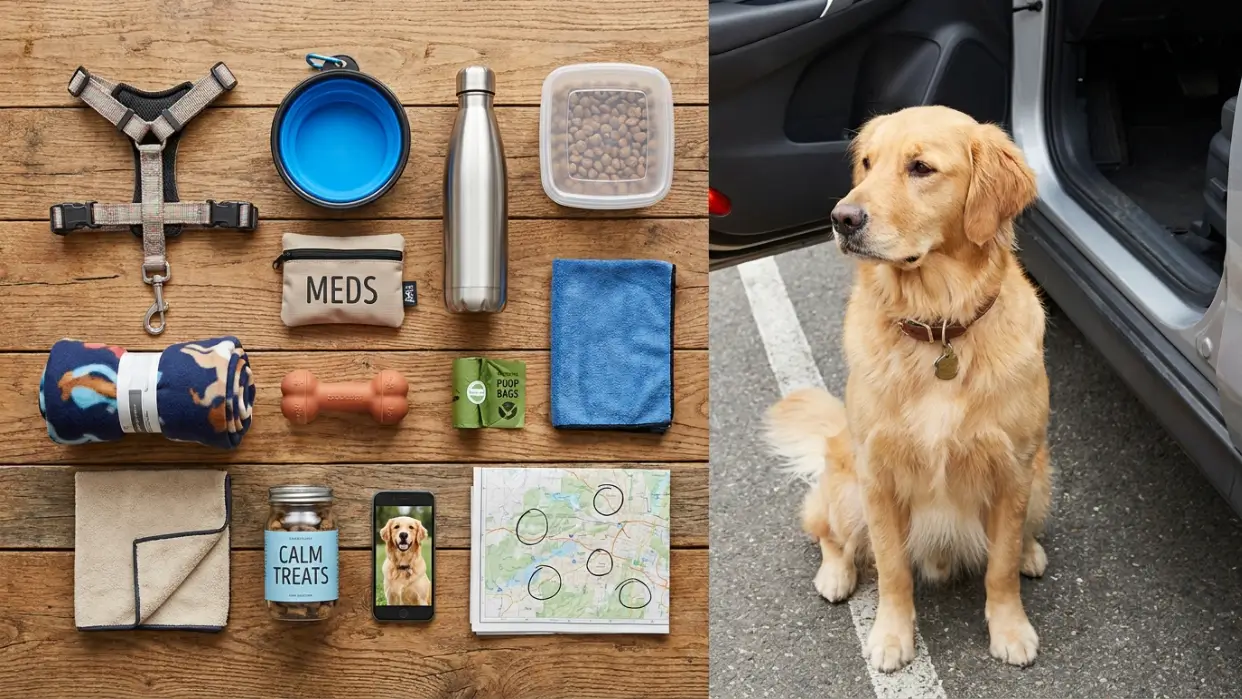
Before every journey, run through this quick list:
- Collar and ID tag with current contact details
- Microchip details up to date
- Safety restraint fitted correctly
- Water and portable bowl packed
- Food and regular medications
- Favourite blanket or toy
- Poo bags and small towel
- Calming supplements if needed
- Recent photo of your dog on your phone
- Stops planned every two to three hours
Travelling with your dog does not have to be stressful. It just takes a little planning, the right gear, and a willingness to go at their pace as much as yours. Get those things right and the open road with your dog by your side is one of the best feelings there is.